Projects
A selection of projects that I'm not too ashamed of
Reinforcement Learning for Quantum Control
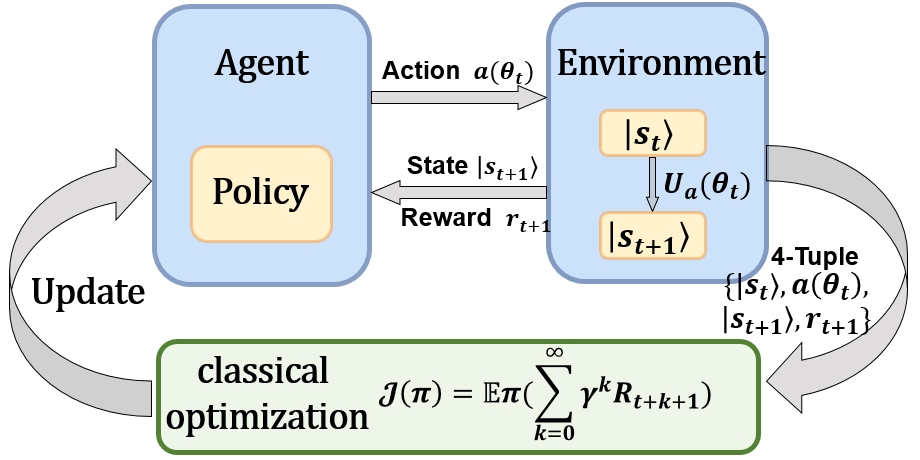
Emerging reinforcement learning techniques that use deep neural networks show considerable promise in control optimization. These methods leverage non-local regularities of noisy control trajectories and facilitate transfer learning between tasks. To harness these powerful capabilities for quantum control optimization, a new control framework has been proposed. This framework aims to simultaneously optimize the speed and fidelity of quantum computation, while also mitigating leakage and stochastic control errors. Specifically, for a broad family of two-qubit unitary gates crucial for quantum simulation of many-electron systems, the control robustness is enhanced by introducing control noise into the training environments for reinforcement learning agents. These agents are trained using trusted-region-policy-optimization. The resulting control solutions demonstrate a two-order-of-magnitude reduction in average-gate-error compared to baseline stochastic-gradient-descent solutions. Additionally, they achieve up to a one-order-of-magnitude reduction in gate time when compared to optimal gate synthesis counterparts.
Dark Matter Detectors Research
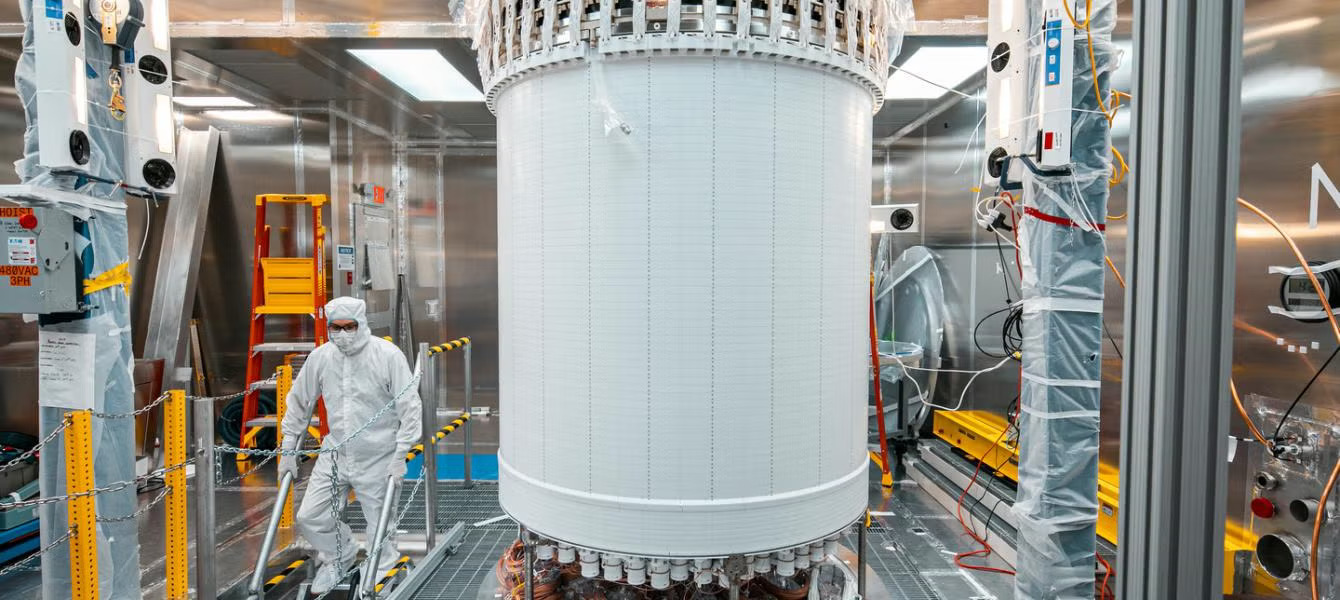
Selected among top 4 European students (out of ~600) for research on dark matter detectors using OTPC architecture. Simulated S1/S2 signal formation in OTPC detectors using GEANT4 (scintillation, electron drift, electroluminescence). Implemented and benchmarked End-to-End ML pipelines (RF, HGB, CNNs, Anomaly Transformers) achieving >93% accuracy in event classification. The project is currently ongoing and will be updated as progress is made.
Quantum Key Distribution
Designed and implemented Quantum Key Distribution (QKD) protocols based on BB84 and E91.Simulated an n-node encrypted quantum network and performed quantitative analysis of eavesdropping strategiesand quantum bit error rates (QBER).The network implementation was integrated with an interactive front-end enabling exploration,of simulation results. The project ranked first among 350 partecipants at the2025 Qiskit Fall Fest Quantum Hackathon.